Coinbase and Kalshi are partnering, and you wouldn’t be mistaken to remember that they’ve also integrated with Robinhood…. and CNN… and CNBC
If you work in finance or crypto, you already believe markets do one job well. They turn messy beliefs into a price.
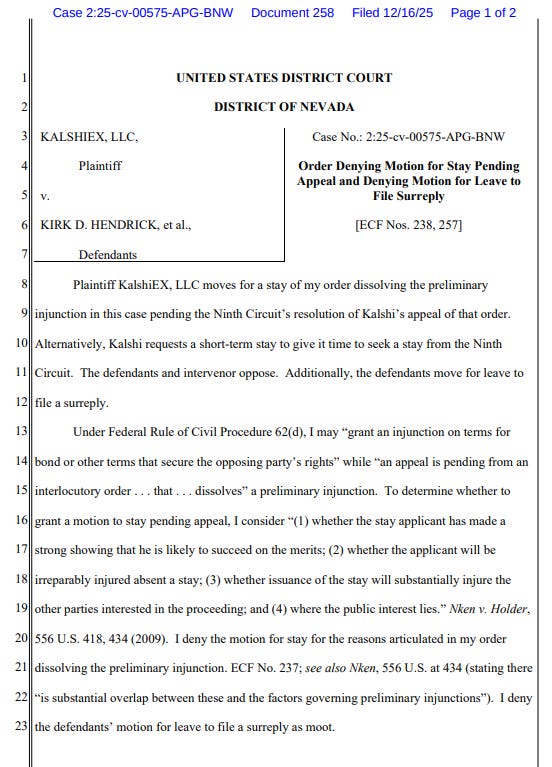
Prediction markets push that principle into new territory: elections, court rulings, macro prints, even sports. And sports is where the fight is loudest right now. A Nevada federal judge just ruled that Kalshi’s sports contracts must comply with state gaming rules, rejecting the company’s argument for exclusive CFTC oversight.
Connecticut ordered platforms to stop offering sports event contracts. Multiple states have sent cease-and-desist letters.
The debate keeps getting stuck on labels. Is it gambling or a financial instrument?
That framing is a dead end, the better question is about incentives, data, and enforceability. To see why, go back to 1919.
Lessons from 1919
The Black Sox scandal was not a story about opinions or beliefs, rather it was a story about payoffs and the structure of corruption.
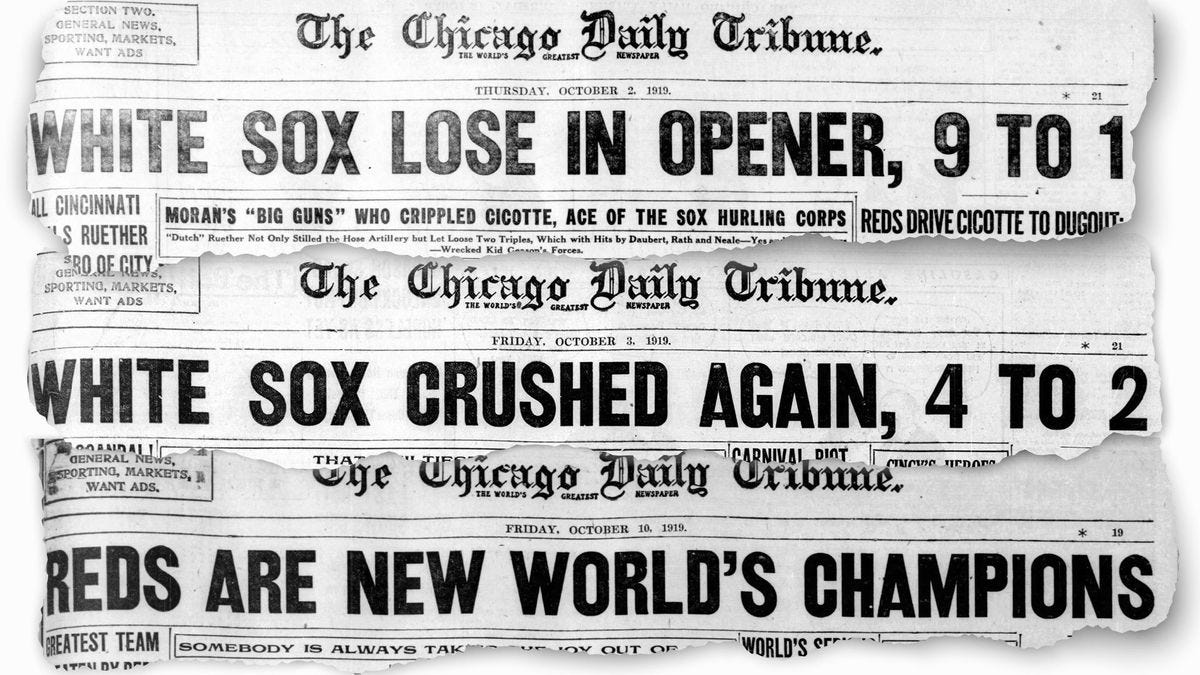
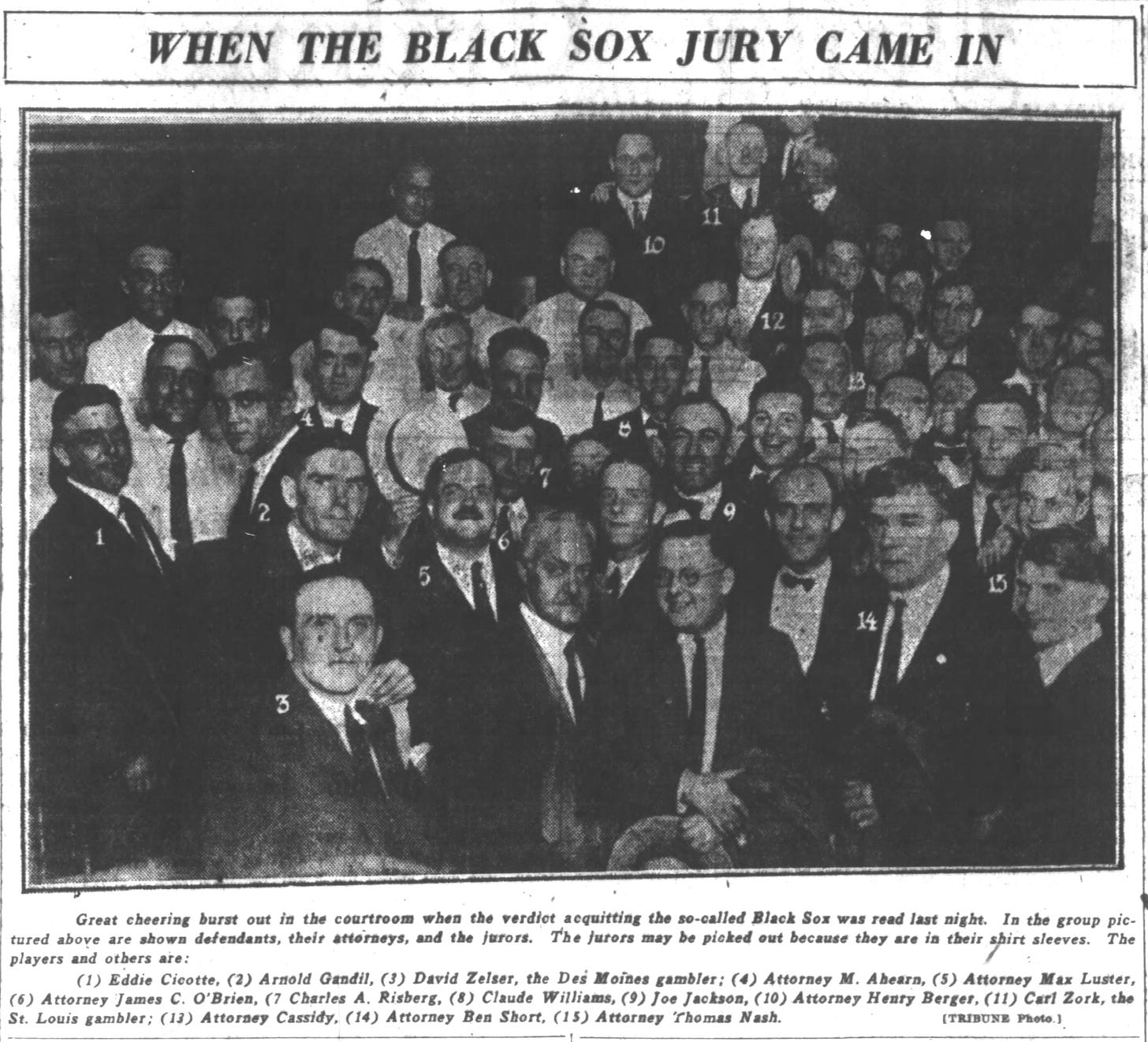
Eight Chicago White Sox players took money from gamblers to throw the World Series against Cincinnati.
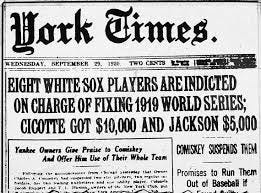
The players were promised $100,000 to lose. First baseman Chick Gandil organized the scheme. Pitcher Eddie Cicotte signaled that the fix was on by hitting the first batter of Game 1 in the back. The White Sox lost the series five games to three.
Here is what matters for our purposes: the fix (rigging outcomes for profit/advantage) worked because a small number of people could control the outcome.
Only eight players was enough for the gamblers to not need to bribe the entire league or manipulate public opinion, instead, they needed leverage over a handful of individuals who touched the ball.
Commissioner Kenesaw Mountain Landis banned all eight players for life in 1921, even though they were acquitted at trial. Baseball created a new integrity regime specifically because the old one had failed to prevent a concentrated group from bending outcomes for profit.
This is the first lesson for modern event markets: when money sits on an outcome, someone will try to bend the outcome. The real question is whether your market design makes bending easier or harder.
Think about what made the Black Sox fix possible.
Small attack surface. Eight players could determine the result. Not eight hundred. Not eight thousand. Eight.
Information asymmetry. The gamblers knew the fix was in. Everyone else was betting blind. The market (informal as it was) could not price what it could not see.
Weak audit trail. There were no transaction records linking positions to identities. When the scheme unraveled, investigators had to rely on confessions that later disappeared from the state attorney’s files, which were probably stolen.
Misaligned incentives for enforcement. Team owner Charles Comiskey had financial reasons to suppress the scandal. He initially tried to cover it up rather than investigate.
Now flip each of those factors and you get a blueprint for integrity:
Large attack surface. The more independent actors required to move an outcome, the harder it is to corrupt.
Symmetric information flow. The more transparent the market, the faster false signals get corrected.
Strong audit trail. The more complete the record of positions and identities, the easier it is to detect collusion after the fact.
Aligned enforcement incentives. The more the exchange itself loses from manipulation, the harder it will work to prevent it.
This is not abstract theory. It is the logic that underlies every serious financial surveillance system in the world.
You can treat prediction markets as a weird cousin of options. A binary contract pays $1 if an event happens and $0 if it does not. Clean payoff. The hard part is not math. The hard part is information.
Good prediction markets deliver three things that matter to finance and crypto:
They compress dispersed information into a single signal. Economists Justin Wolfers and Eric Zitzewitz showed why binary market prices often map to average beliefs about probabilities. If you are a trader, that should sound familiar. Prices are not truth. Prices are a scoreboard for marginal conviction. A 2015 PNAS study found prediction markets could forecast whether psychology studies would replicate, correctly predicting the binary outcome 73% of the time across 103 replication attempts.
They move fast when reality changes. Polls and pundits are slow. A liquid market updates in minutes. Research from the Iowa Electronic Markets showed their forecasts beat polls three out of four times across U.S. presidential elections from 1988 to 2004, and the advantage was most pronounced at longer time horizons. The market price becomes a public series you can backtest, hedge around, and compare to other signals.
They open a bridge between traditional finance and crypto infrastructure. Onchain settlement rails are global. The user base is already trained to trade event risk. Polymarket saw over $3 billion in trading volume on the 2024 presidential election alone. That is not a toy. That is scale.
Scale is also why regulators care. And why the design details matter more than the labels.
Predict-a-Democracy
Democracy breaks when people cannot agree on basic odds, not values.
How likely is a recession? How likely is a government shutdown? How likely is a candidate to win? When those expectations drift apart, every faction lives in its own reality.
Prediction markets can help in concrete ways:
They create a shared reference point. A market price is not a sermon. It is a number. It updates when new facts arrive. That makes it easy to audit after the fact. A public forecast also disciplines debate. People can argue with it, but they have to argue with a moving target, not a single hot take frozen in time.
They reward accuracy. A pundit can be wrong for years and still get booked on television. A trader who stays wrong gets carried out. Philip Tetlock’s research on superforecasters found that combining prediction markets with structured thinking produced forecasts that beat intelligence community baselines. The incentive structure leans the system toward accountability even when it does not make markets perfect.
They sharpen claims into testable statements. A campaign promise can be vague on purpose. A well-designed contract forces precision. What outcome? What date? What data source? That kind of framing improves public discourse even for people who never trade.
There is also serious scholarly pushback. Erikson and Wlezien argued that properly adjusted polls can outperform certain market designs. A December 2024 study analyzing $2.4 billion in trading across Kalshi, PredictIt, and Polymarket found accuracy varied significantly: PredictIt correctly predicted 93% of outcomes, Kalshi hit 78%, and Polymarket came in at 67%. The researchers found that some price movements reflected traders reacting to each other rather than to new political information.
That debate is healthy. It points to the real lever: design matters. Not all prediction markets are created equal.
Predict-a-Fraud
This is the part most people miss. Markets can reduce fraud when they are built like markets.
Fraud likes darkness. Exchanges produce light.
Exchanges leave an audit trail. In market abuse cases, regulators start with records: orders, fills, timestamps, participant IDs, position changes. Nasdaq’s market surveillance systems monitor over 120 equity markets and 50 futures and options markets using algorithmic pattern detection. The FCA ran a three-month Market Abuse Surveillance TechSprint in 2024 specifically to explore how AI and machine learning could detect evolving forms of manipulation. FINRA requires firms to monitor for spoofing, layering, wash trading, and momentum ignition across asset classes.
That infrastructure exists because surveillance works. And it works because trades leave footprints.
Compare that to informal betting networks where the data is thin and enforcement is messy. The 1919 fix succeeded partly because there was no paper trail connecting the gamblers to the players until someone confessed.
A liquid market makes lies expensive. If someone tries to push a false narrative by moving the price, a liquid market gives others a direct incentive to trade against it. That is not a moral claim. It is a microstructure claim. You can still get manipulation attempts. You also get a built-in counterforce: anyone who knows the truth can profit by correcting the distortion.
Tight limits shrink the payoff from corruption. The Black Sox scandal was profitable because the payoff was large relative to player salaries. (Most players ended up making about $5,000 from the bribes, roughly equal to what they would have earned from the winner’s share if they had won legitimately.) Modern event markets can cap that payoff. Position limits, KYC requirements, and AML controls reduce the upside of inside games.
The CFTC has treated small, research-oriented event markets differently for decades, including no-action relief tied to position restrictions for the Iowa Electronic Markets. Scale is a choice. Limits are a choice. Both affect integrity.
The U.S. system has a feature that finance people understand: self-certification. Designated contract markets can list new contracts by filing a self-certification with the CFTC. That makes speed possible. It also makes line-drawing unavoidable.
CFTC Rule 40.11 deals with event contracts tied to categories like gaming. The agency proposed amendments in 2024 to address how the “public interest” finding works under the Commodity Exchange Act.
Now add the state angle.
Nevada’s ruling against Kalshi shows courts may treat sports contracts as squarely inside state gaming regimes, even when the platform argues it sits under federal commodities oversight. Judge Andrew Gordon wrote that Kalshi’s interpretation “would require all sports betting across the country to come within the jurisdiction of the CFTC rather than the states and Indian tribes. That interpretation upsets decades of federalism regarding gaming regulation.”
The ruling dissolved a preliminary injunction that had protected Kalshi from state enforcement. Kalshi is appealing. Similar cases are pending in New Jersey, Massachusetts, Ohio, California, and Wisconsin. Tribal gaming interests have filed lawsuits arguing prediction markets violate the Indian Gaming Regulatory Act.
Meanwhile, DraftKings and FanDuel both announced plans to launch prediction market businesses, then gave up interests in Nevada because of state opposition. Robinhood agreed to stop offering new sports event contracts in Nevada pending further proceedings.
This is why you should care even if you never trade an election contract: the outcome will shape what “event risk” can look like as a regulated product for the next decade.
Jake Paul’s Fight
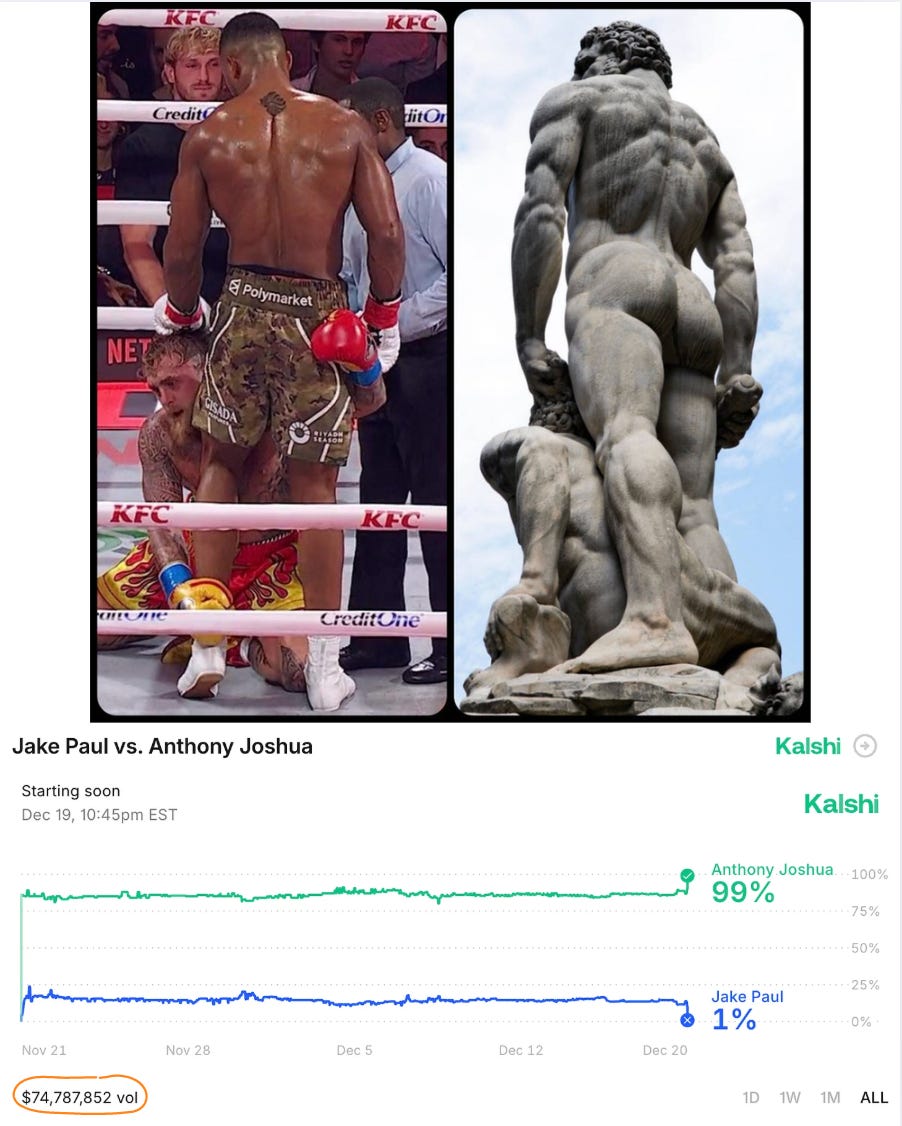
On December 19, Jake Paul and Anthony Joshua fought in a rather bizarre event, with a ton of quarreling over the recent weeks over who will win (public definitely believed Anthony Joshua would win).
Anthony is is a British professional boxer and former two time heavyweight champion having held the unified world heavyweight championship twice between 2017 to 2019 and 2019 to 2021, and he’s also only 36 to Paul’s 28.
I’m almost curious, due to the massive skill gap, if the consensus bet Paul could’ve bet on was that he’d lose, and the fight was extended out longer just for ratings and to game other bets that were taking place on Kalshi, specifically this bet here.
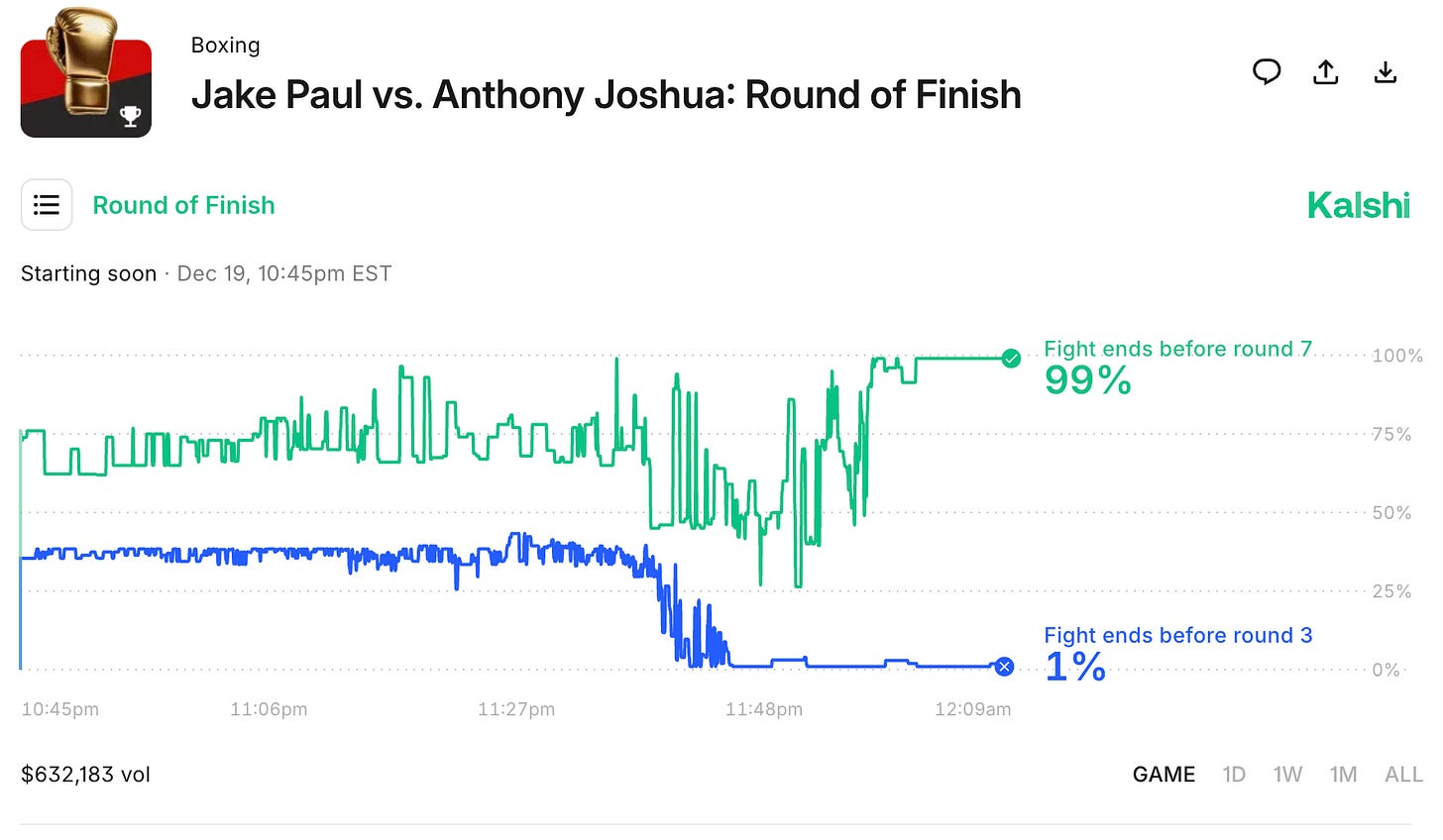
Whether something happened here or not, I am still in support of prediction markets as a whole.
Black Sox Test
Here is a simple framework you can use to evaluate any prediction market. A market is most defensible when it passes all five criteria:
1. Clean Settlement
One clear outcome. One clear data source. One clear deadline.
If you cannot describe the settlement in a single sentence, the contract is not ready. Ambiguous settlement creates disputes. Disputes create opportunities for manipulation. The cleaner the resolution mechanism, the harder it is to game.
2. Low Manipulation Surface
Ask who can move the outcome with a phone call.
Elections are hard to rig by a single actor. Tens of millions of voters. Distributed counting. Multiple oversight layers. A niche sports prop is different. The smaller the group that can affect the result, the higher the corruption risk.
1919 was a case where eight people could bend the outcome, and money found that weakness within weeks of the season ending.
3. Strong Identity and Cash Controls
KYC and AML are not paperwork. They are integrity plumbing.
If you cannot confidently link positions to real entities, you cannot police collusion. You cannot detect wash trading. You cannot identify when the same person is on both sides of a trade. The December 2024 study on prediction market accuracy found that Polymarket’s structure, which allows near-unlimited stakes with minimal friction, attracted “a different class of traders” and made it more susceptible to outsized influence by single actors.
Position limits matter. Identity verification matters. These are not bureaucratic obstacles. They are the foundation of market integrity.
4. Real Surveillance and Enforcement
This is where “market” becomes more than a website with a price feed.
Audit trails. Anomaly detection. Concentrated position monitoring. Clear escalation paths to enforcement. The CFTC’s market surveillance program monitors large trader positions daily across all active futures and options markets. They watch for unusual activity in the cash markets that could be used to manipulate settlement prices. That kind of infrastructure exists because it works.
A prediction market that cannot reconstruct who traded what and when is not really a market. It is a suggestion box with money attached.
5. A Regulator With Clear Scope
Right now, sports contracts are the stress test because federal and state theories collide in practice.
Markets do best when the rules are legible and enforceable. When jurisdictions overlap and conflict, uncertainty increases for everyone: platforms, traders, and regulators. The ongoing litigation between Kalshi and state gaming authorities will eventually produce clarity, either through appellate courts or through Congress. Until then, the ambiguity itself is a form of risk.
Prediction markets can serve finance because they price event risk with a simple payoff and a fast feedback loop.
They can serve democracy because they produce a public forecast that rewards accuracy and can improve how we talk about uncertainty.
They can reduce fraud when they run with exchange-grade records, identity controls, and surveillance, because manipulation leaves footprints and countertraders have incentives to erase distortions.
The Black Sox story stays useful because it strips the debate down to one hard fact: money will try to bend outcomes.
The job is to design markets where bending outcomes is a bad trade.
Not because we trust participants to be virtuous. Because we structure the game so that cheating is expensive, detectable, and punished.
That is what separates a market from a casino. And it is the standard prediction markets should be held to as they scale.
One of the songs I listened to while writing this: