China utilizes makes open-weight model, “publicly available” models, whereas U.S. companies make “closed” models, which means that you cannot run all OpenAI models or any Anthropic (Claude) models on device.
In China, the major models Qwen, which runs on 52% of multi-model systems globally, GLM, Deepseek and so forth can all run on your device, ideally on a desktop computer but most can be ran, in a quantized form, on a laptop,
The phone manufacturer ZTE has a gaming oriented phone line called Redmagic, that have typically used advanced cooling mechanisms to cool down their phones for prolonged gaming sessions. The Redmagic Pro 11 features two things never really seen on smartphones, a built in vented fan and a liquid cooling system, allowing you to run rather large AI models on the phone.
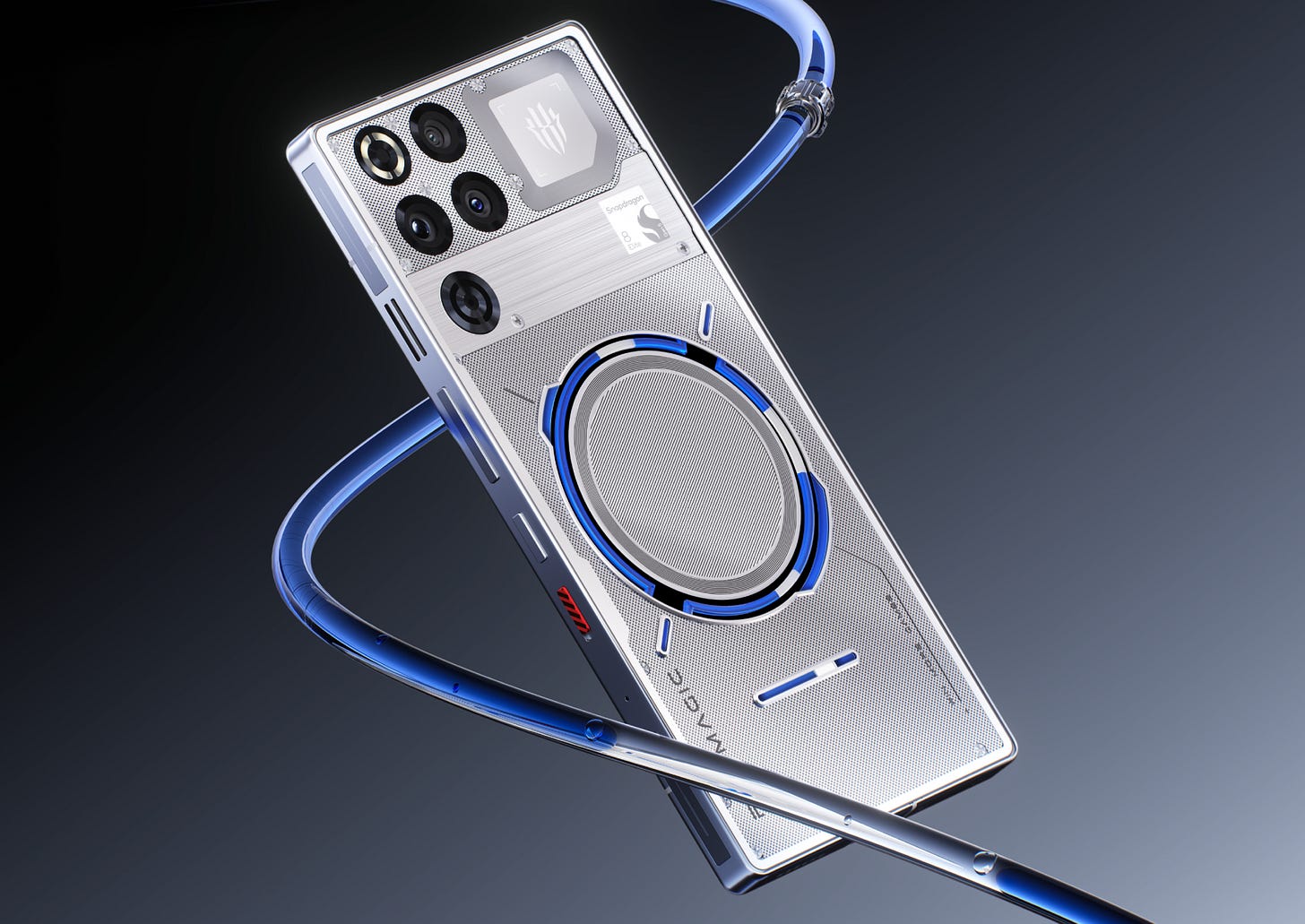
In short, liquid cooling systems use a sealed loop of low boiling point fluorinated liquid, that typically sit around the processor within the smartphone. As the processor heats up, the fluorinated liquid absorbs the thermal energy and evaporates, which is referred to as a “phase change” from liquid to vapor.
This liquid travels through the sealed channel away from the hot spot around the processor towards cooler areas of the phone’s chassis, therefore dissipating the heat. Fluorinated liquids are chosen as they do not corrode internal components, flow easily, and will not short circuit if a leak occurs, and are also non toxic and non flammable. The fluorinated coolant running through the RedMagic phone is the same coolant that runs through AI data center server racks.
This is in contrast to what is seen on an iPhone 17 Pro Max, a vapor chamber.
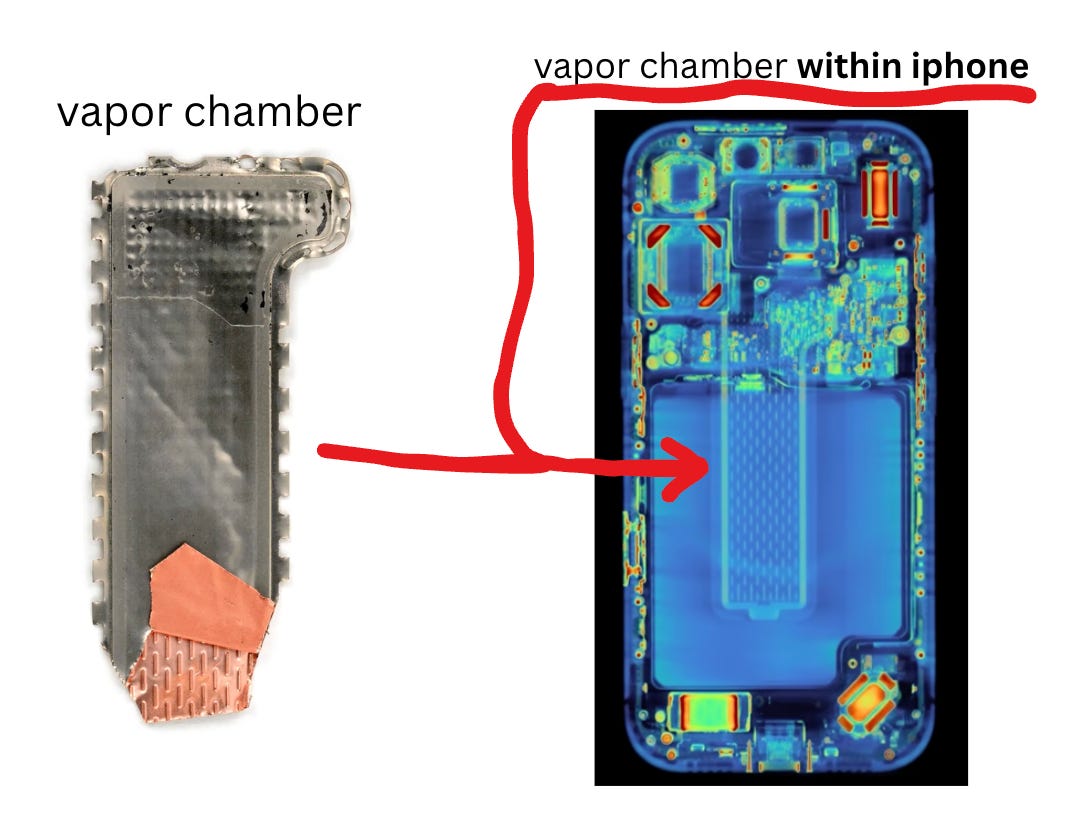
A vapor chamber is a sealed copper plate with a “wick” structure with a few drops of deionized water, and when the water evaporates it spreads the heat across a wider area, and then condenses back and repeats.
Both the vapor chamber and liquid cooling are aiming to cool down the processor, liquid cooling within RedMagics system just makes the circuit longer with active airflow (from a separate fan) on top.
RedMagics design was able to maximize cooling by having liquid cooling and fan, but its interesting that without a fan, the iPhone benefits from a 30% boost in cooling if it has liquid cooling on top of a vapor chamber, and both can work together, I don’t know where the space would be found, but it is potentially possible.
why are you telling me this?
We’ve known that Deepseek exists and that China makes open weight models, but I think the push for mobile AI from China is very interesting, and under explored in the US. On my Pixel, I wouldn’t say Gemini is really that revolutionary, but using a Chinese phone I believe it’s extremely impressive.
ByteDance built a prototype phone where ByteDance’s AI agent Doubao is fused into Android at the OS level. In a demo, a user stated “find someone to stand in a queue for me” and the AI automatically launched the correct local gig economy app, entered the details and prepared the booking, all without the user knowing which app to use or touching the screen.
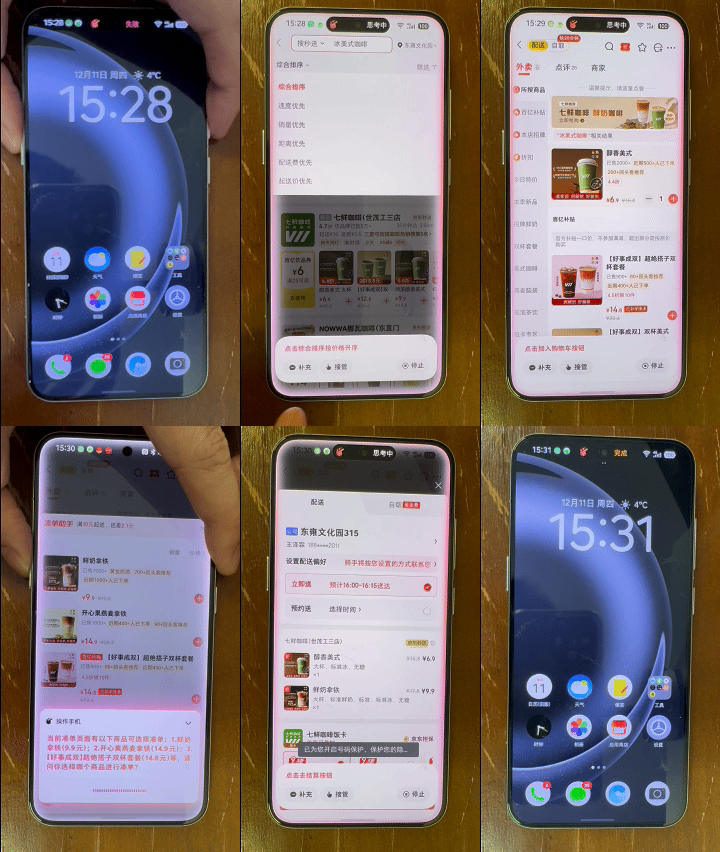
AI running on device has far more system privileges than ordinary apps, it can see the screen, scroll type and navigate ~ akin to OpenClaw running on your smartphone, and no other western phone does this.
Every major Chinese phone brand shipped DeepSeek in system updates within weeks of its release, with Huawei embedding DeepSeek-R1 into its AI assistant Xiaoyi across HarmonyOS. Oppo integrated it into their Find N5 foldable, where users access it through voice commands with zero installation.
Will we see this same thing happen now, likely, but possibly not as well.
why would I want to run a model locally?
Privacy and cost.
Any data you feed to a local AI model isn’t shared with others, so any therapy or health questions are with you and you only. Also, a local AI model is entirely free, except for the cost of electricity that its burning, and that is a problem for running a local AI model in the background.
Other additional benefits are that you can customize a local LLM and have zero latency alongside offline access.
On the Redmagic Pro 11 one can run a distilled version of Deepseek, a Chinese “equivalent” of ChatGPT 4o, as R1-Distill 7B, but it is slow warms up the device. 1.5B parameter models, smaller and lower context windows so they are a bit dumber do run better.
By 2028, all flagships can run a 7-13B parameter model.
For the next couple of years, renting a VPS will be far faster, but for the average person local AI will be massive.
I predict glasses ~or earbuds that connect to your phone as the computer are the norm before 2030. Once people are wearing more wearable devices like Meta’s, real world data will even get far better and the average person will believe in AI’s potential far more.
LPDDR6 phones are arriving in Q3/Q4 2026 which will enable conversational speed 7-13b models. Memory bandwith is what bottlenecks local AI vs processing power, your phone moves data at 50-90 GB/s, and a data center GPU moves it at 2,000+, LPDDR6 closes that gap enough that conversation speed inference is a real possibility.
Human labor, interestingly, is cheaper than the API costs oftentimes. I’m very curious what this means for the workforce going forward, because I do not see US AI companies API costs coming down.
Considering Anthropic is claiming distillation attacks with their models from the Chinese model providers, maybe someone in the US needs to distill the models that distilled the US models to undercut both?
I believe that will produce the AI equivalent of whiskey. I have more to add, but I ran out of thoughts for the time being.
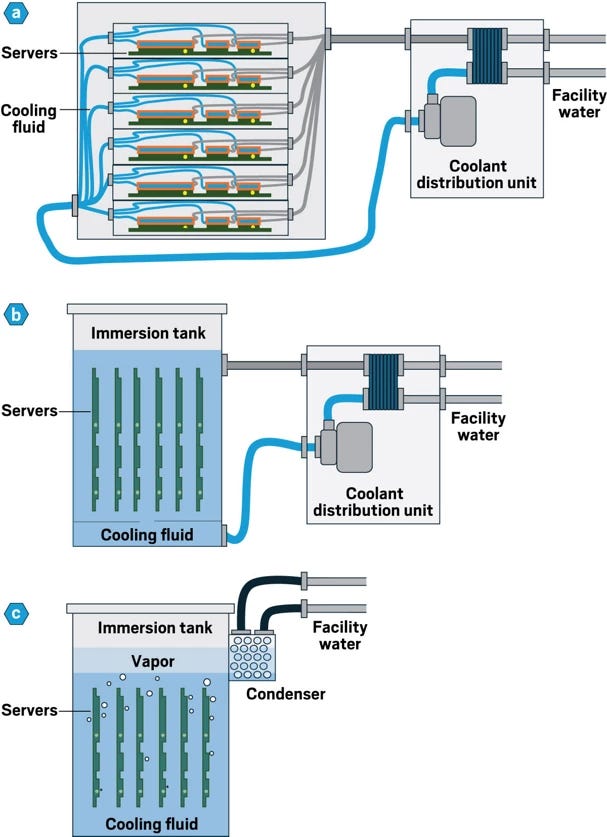
Three different processes of liquid cooling for data centers, not relevant to above content.